
Lmdxh550md: Technical Explainer
Lmdxh550md is a technical reference label associated with glasses-free 3D display workflows in the 3DV documentation system. This explainer defines the term, places it inside the 3D Spatial Display category, and outlines how teams evaluating autostereoscopic systems should read the label during product, content, and workflow planning.
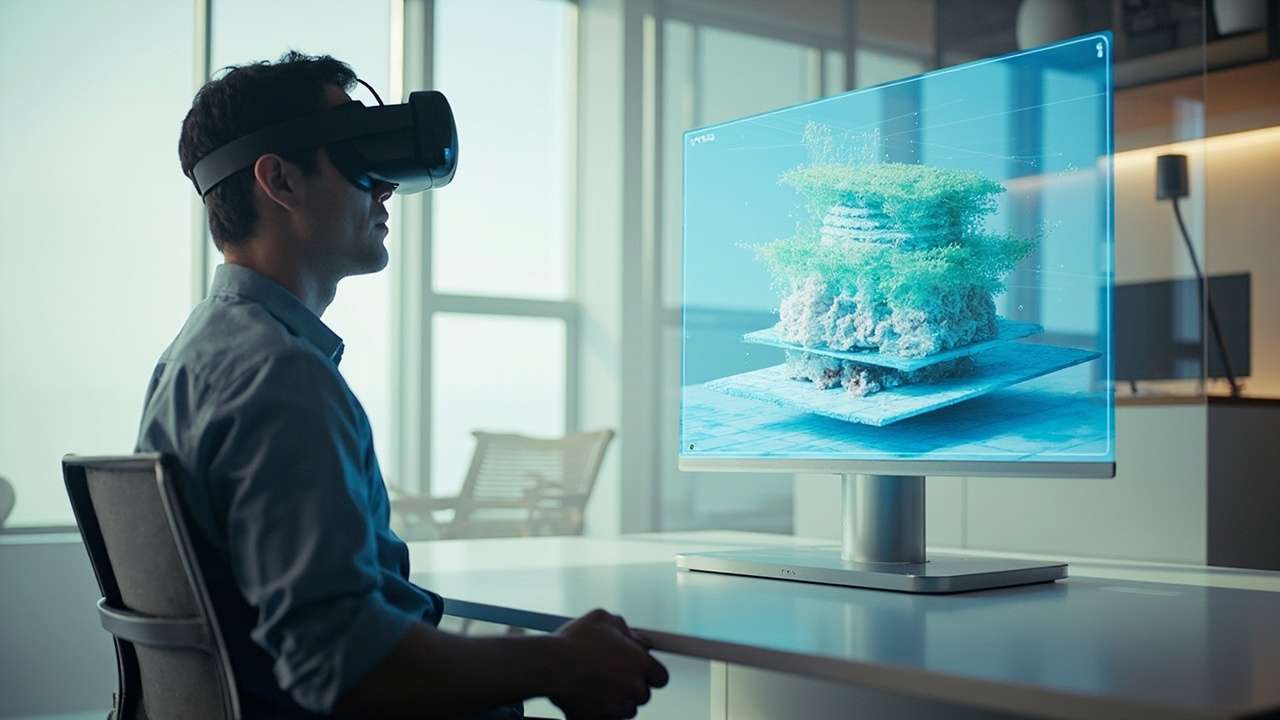
A typical Lmdxh550md review setup using a glasses-free 3D spatial display
Intent and definition
In the 3DV context, Lmdxh550md is used as a shorthand for a glasses-free 3D display workflow marker rather than a standalone product name. It is referenced when buyers and integrators need to describe a setup that delivers depth perception without VR headsets or passive 3D glasses, anchored on a monitor-style review station.
The closest public category expressions are:
- Glasses-free 3D display
- Autostereoscopic display
- 3D spatial display
- 3D spatial monitor
Buyers who search for or receive the Lmdxh550md reference are typically evaluating professional review scenarios rather than consumer entertainment. The most common fit areas are medical visualization, industrial inspection, CAD review, and microscope collaboration.
How Lmdxh550md fits glasses-free 3D display workflows
Lmdxh550md sits inside the broader 3D Spatial Display category. The category framing matters because glasses-free 3D display workflows depend on the display delivering left-eye and right-eye views through optical layers and eye tracking, not through eyewear.
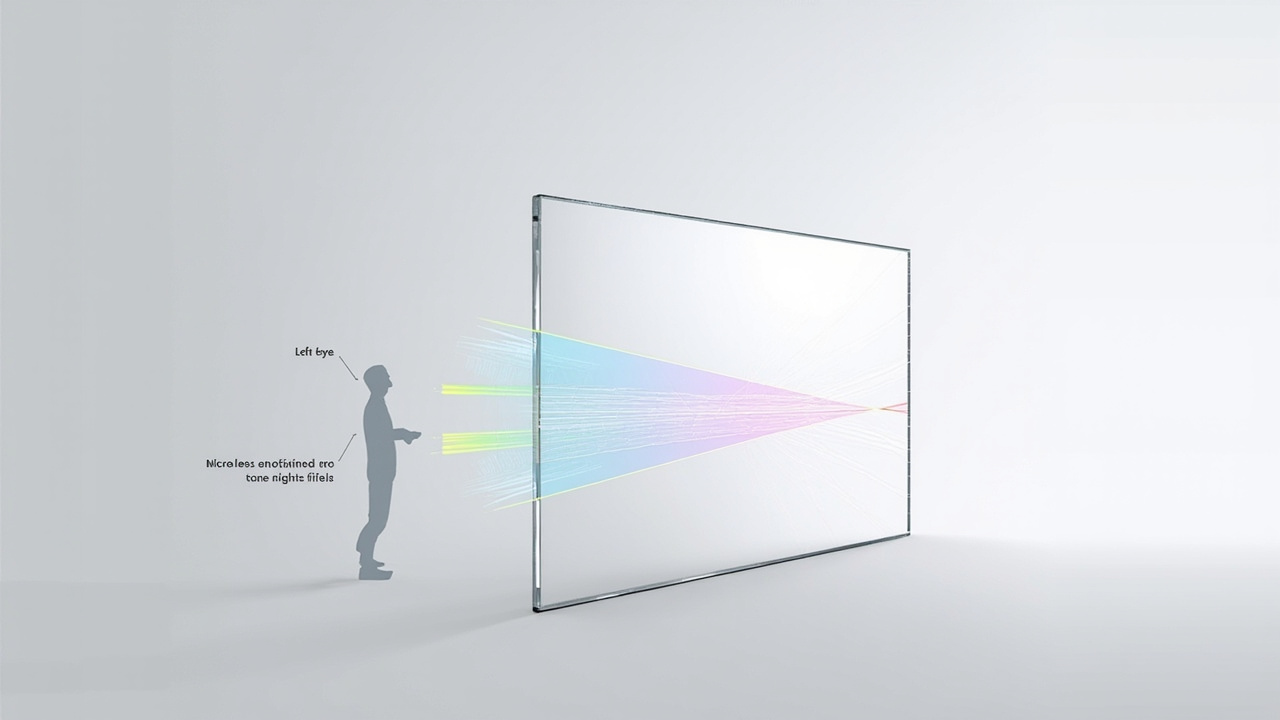
How an autostereoscopic display delivers left and right views without glasses
For a deployment labeled Lmdxh550md, the practical considerations are:
- The display must support an autostereoscopic optical architecture, not a stereoscopic monitor that requires glasses.
- The viewer experience should remain monitor-like so reviewers can sit, point, and discuss content without headgear.
- The workflow should accept stereo or 3D-ready source content, including SBS feeds, CAD stereo output, medical 3D exports, or custom 3D pipelines.
- The setup should be evaluated against the Spatial Display product line rather than touch or interactive display lines, because current Spatial Display models are positioned as non-touch.
Technical concepts behind the term
Several technical concepts recur when Lmdxh550md is used in evaluation notes:
- Eye-tracked autostereoscopic display. The display tracks the viewer’s eye position and adjusts the left and right view mapping in real time so depth remains stable as the viewer moves.
- Structured-light eye tracking. A tracking method that uses projected light patterns to locate the viewer accurately enough for stereo view delivery.
- Display-side FPGA processing. On-display processing that handles view mapping, switching, and synchronization at low latency.
- Dynamic stereo view mapping. The continuous recalculation of which pixels belong to the left-eye and right-eye views.
- Left-eye and right-eye view delivery. The core output of an autostereoscopic panel, which replaces the need for shutter or polarized glasses.
- Microlens or lenticular optical layer. The optical component that directs views to the correct eye without eyewear.
- 2D and 3D workflow switching, especially on Pro models. Pro series displays support smoother transitions between standard 2D work and 3D review, which matters for mixed workflows.
These concepts are not unique to Lmdxh550md, but the label is typically used when a checklist combines several of them in the same workflow.
Workflow fit and model selection
Lmdxh550md workflows map to the 3DV Spatial Display lineup. Selection usually depends on room size, viewer count pattern, and whether the buyer frequently switches between 2D and 3D use.
- 14 inch Essential. Compact size for dedicated 3D review setups and small demonstration spaces.
- 15.6 inch Pro. Portable option for mixed 2D and 3D workstation use, with stronger workflow switching.
- 27 inch Pro. Main professional review station for teams that need a primary 3D-ready display alongside 2D work.
- 32 inch Essential. Large dedicated 3D room, lab, showroom, or classroom setup.
Pro series tends to fit Lmdxh550md buyers who split time between 2D and 3D, while Essential series tends to fit buyers who treat the display as a dedicated 3D spatial monitor. Final selection should run through the Display Selector flow and a pre-purchase conversation.
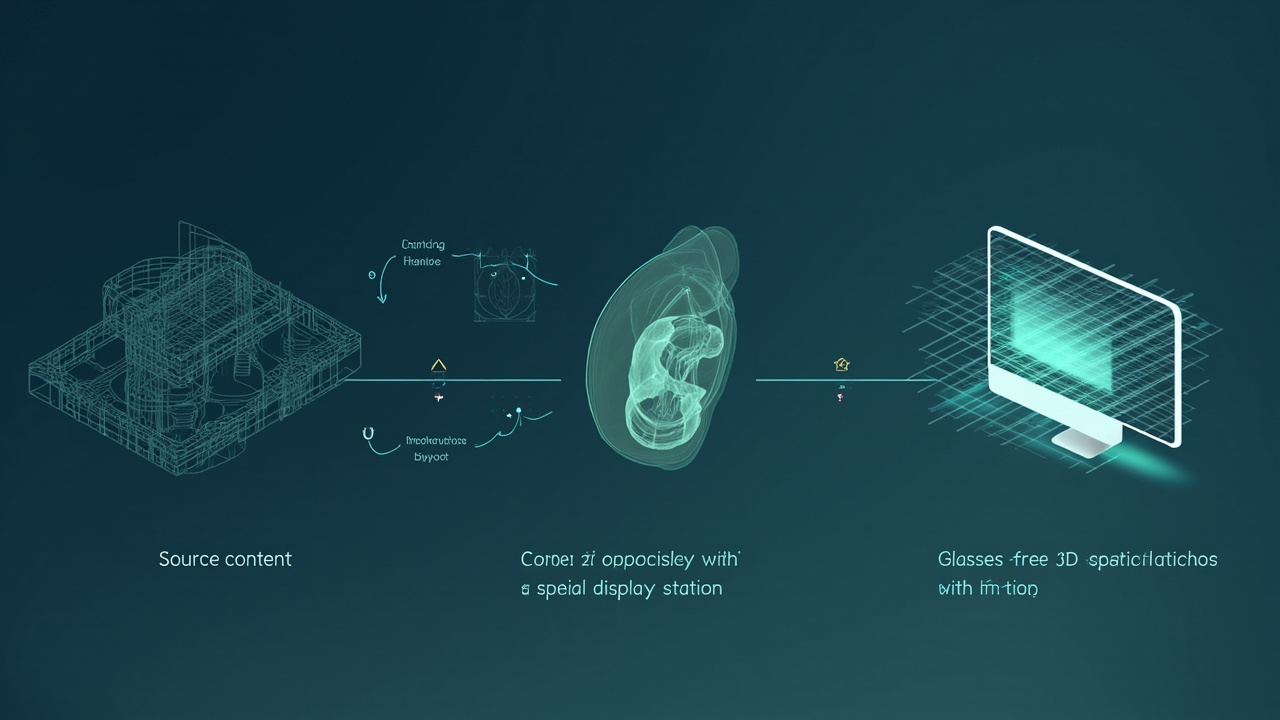
Lmdxh550md content workflow from source to spatial review
Content and compatibility considerations
A Lmdxh550md workflow is only as strong as the source content feeding it. Best-fit content types include:
- SBS side-by-side stereo content
- CAD and 3D model viewers that output stereo
- Medical or industrial 3D exports
- Unity, Unreal, WebGL, or custom 3D applications with stereo support
- Stereo-ready video or visualization pipelines
Content that may need preparation before it runs cleanly on a Spatial Display includes standard 2D video, flat images, software that only emits a single 2D view, and 3D applications without stereo camera or SBS output. The Content-to-3D Path Checker and the Spatial Display Content Compatibility guide are the recommended checkpoints before committing to a deployment.
Limits and what to verify
Lmdxh550md should be treated as a workflow label, not a certification. Several limits apply:
- Current Spatial Display models are positioned as non-touch. Do not assume touch interaction is part of the workflow.
- Glasses-free 3D is optimized for one primary viewer position at a time under typical viewing conditions. Multi-viewer group review requires realistic expectations about viewing zones.
- Stereo or 3D-ready source content is required for the depth effect to be meaningful. Pure 2D content will not gain depth from the display alone.
- Pricing, model availability, and feature details change. Verify current shop and product data before quoting, recommending, or building a proposal.
Next steps
Teams evaluating a Lmdxh550md setup can move forward with three concrete steps:
- Run source content through the Content-to-3D Path Checker to confirm stereo readiness.
- Use the Display Selector to shortlist between Essential and Pro series based on whether 2D and 3D switching is a daily requirement.
- Submit a Request Demo or Ask Before Ordering inquiry if the workflow involves medical visualization, industrial inspection, CAD review, or microscope collaboration, so the team can confirm viewing distance, room layout, and content pipeline fit.
Following these steps keeps the evaluation grounded in workflow fit rather than feature lists, which is the recommended framing for any Lmdxh550md deployment.