
Lmd32m1md: Technical Explainer
Intent and keyword context
Lmd32m1md is a candidate search term that surfaced in keyword research related to the glasses-free 3D display category. Because the term itself is not a recognized product model, specification, or established industry label, this explainer treats it as a candidate keyword and frames the article around the underlying category it appears to map to: glasses-free 3D spatial display systems used for professional review workflows.
This page is written as an educational explainer. It is intended for technical buyers, visualization leads, and evaluation teams who want to understand what such a search intent usually points to, and how 3DV approaches that category.
Lmd32m1md framed as a candidate search term inside the glasses-free 3D display category.
Where this term sits in the glasses-free 3D category
Search terms that look like opaque strings (for example, model codes, part numbers, or unclear product references) often sit inside one of three buckets within the broader spatial 3D category:
- A specific autostereoscopic display model or panel designation, where the string is a hardware identifier.
- A software, codec, or content-pipeline label, where the string identifies a stereo output format or render path.
- An ambiguous or low-quality keyword, where the term has weak intent and should be evaluated cautiously before being treated as a content target.
Within 3DV’s current product and SEO architecture, the main commercial anchor is the Spatial 3D Display line. The four listed models in that line are the 14 inch Essential, 15.6 inch Pro, 27 inch Pro, and 32 inch Essential. Because Lmd32m1md does not match any documented 3DV model identifier in the current background material, the responsible reading is that it sits inside the category rather than naming a specific shipped product.
Underlying technology in plain terms
A glasses-free 3D spatial display uses an autostereoscopic optical layer combined with eye tracking, structured-light sensing, and on-display FPGA processing to deliver left-eye and right-eye views without headsets or 3D glasses. The display dynamically maps the correct view to the viewer’s position so that depth is perceived from a monitor-style workflow rather than a VR-style workflow.
Key building blocks the buyer should understand when reading any candidate keyword in this space:
- Eye-tracked autostereoscopic display: the panel follows the viewer and serves the correct view at the correct moment.
- Structured-light eye tracking: the system locates the viewer using structured-light sensing rather than headset-mounted cameras.
- Display-side FPGA processing: real-time view mapping is handled on the display hardware.
- Dynamic stereo view mapping: the left and right views are routed per frame based on viewer position.
- Microlens or lenticular optical layer: depending on the panel, the optical layer produces the directional views.
- 2D and 3D workflow switching: Pro-series displays are designed to move between high-quality 2D use and 3D review without leaving the workstation.
Current 3DV Spatial Display positioning is non-touch. Buyers evaluating any candidate keyword in this category should not assume touch support for the current Spatial Display models unless a future source explicitly states otherwise.
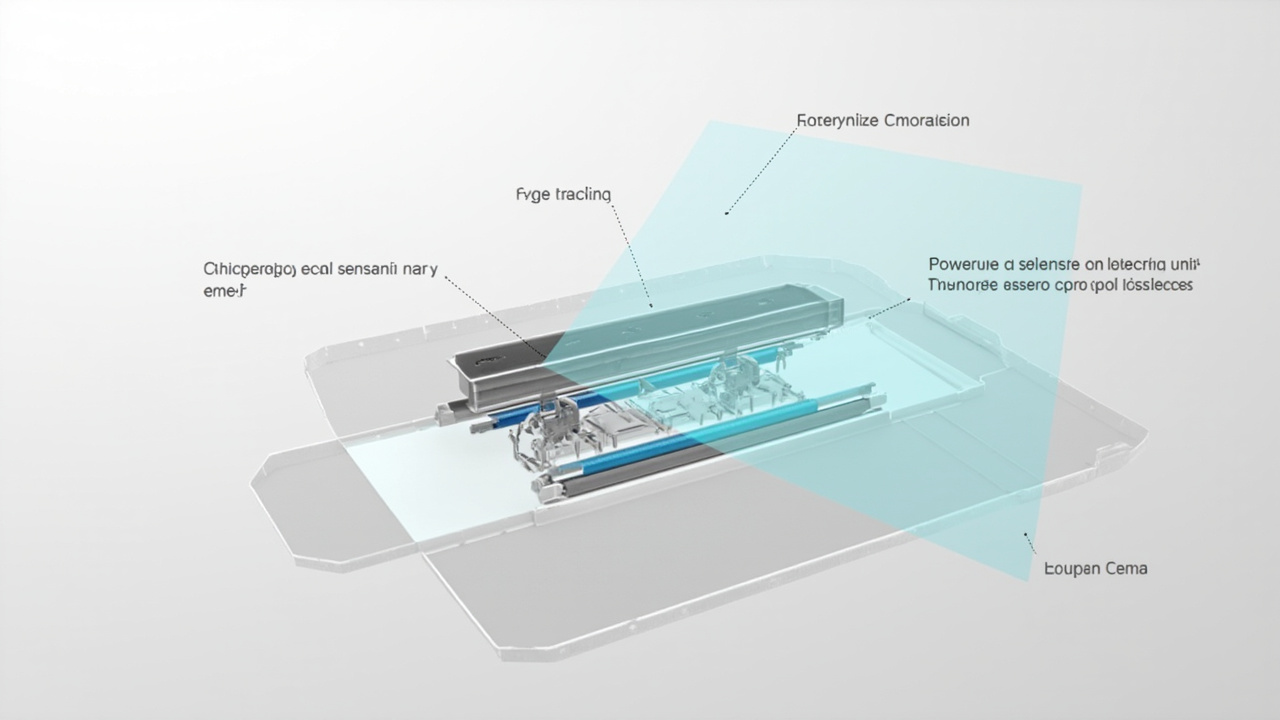
Core building blocks of an eye-tracked autostereoscopic display, shown as a labeled diagram.
Workflow fit and content compatibility
Any candidate term in the glasses-free 3D space should be evaluated against the actual content pipeline, because the display is only one part of the workflow. 3DV systems work best when the source content can output stereo or 3D-ready visuals.
Typical content that maps cleanly to a glasses-free 3D review workflow:
- Side-by-side (SBS) stereo content
- CAD and 3D model viewers that support stereo output
- Medical or industrial 3D exports such as DICOM volumes, CT reconstructions, or NDT scan data
- Unity, Unreal, WebGL, or custom 3D applications written or configured for stereo output
- Stereo-ready video or visualization pipelines prepared for autostereoscopic playback
Content that usually needs preparation before it will display correctly in 3D:
- Ordinary 2D video assets that were never authored with stereo views
- Flat images that only contain a single viewpoint
- Software that only outputs a single 2D view and cannot be configured for stereo output
- 3D applications that lack a stereo camera or SBS output mode
For evaluation teams, the practical question is not whether the display renders depth, but whether the team’s existing content pipeline can be configured to feed it stereo-ready material.
Requirements, limits, and evaluation criteria
When evaluating any candidate keyword that points toward the glasses-free 3D category, a short checklist helps separate fit from hype:
- Content readiness: does the team already produce stereo or 3D-ready output, or will content need to be re-authored?
- Viewer model: is the use case for one primary reviewer, a small review group, or rotating observers? Eye-tracked autostereoscopic systems are typically optimized for a single primary viewer within the tracking sweet spot.
- Workspace fit: Pro models fit mixed 2D and 3D workstation use; Essential models fit dedicated 3D review rooms, labs, classrooms, or showrooms.
- Software path: confirm that the CAD, DICOM, or 3D viewer in use supports stereo or SBS output for the target platform.
- Medical framing: any use in medical visualization should be limited to visualization, review, education, training, communication, and workflow evaluation. 3DV systems are not positioned as diagnostic devices.
Avoid reading any opaque candidate keyword as a guarantee of certification, clinical approval, or competitive ranking. Treat it as a search-intent signal and route the underlying question to the workflow-fit framework above.
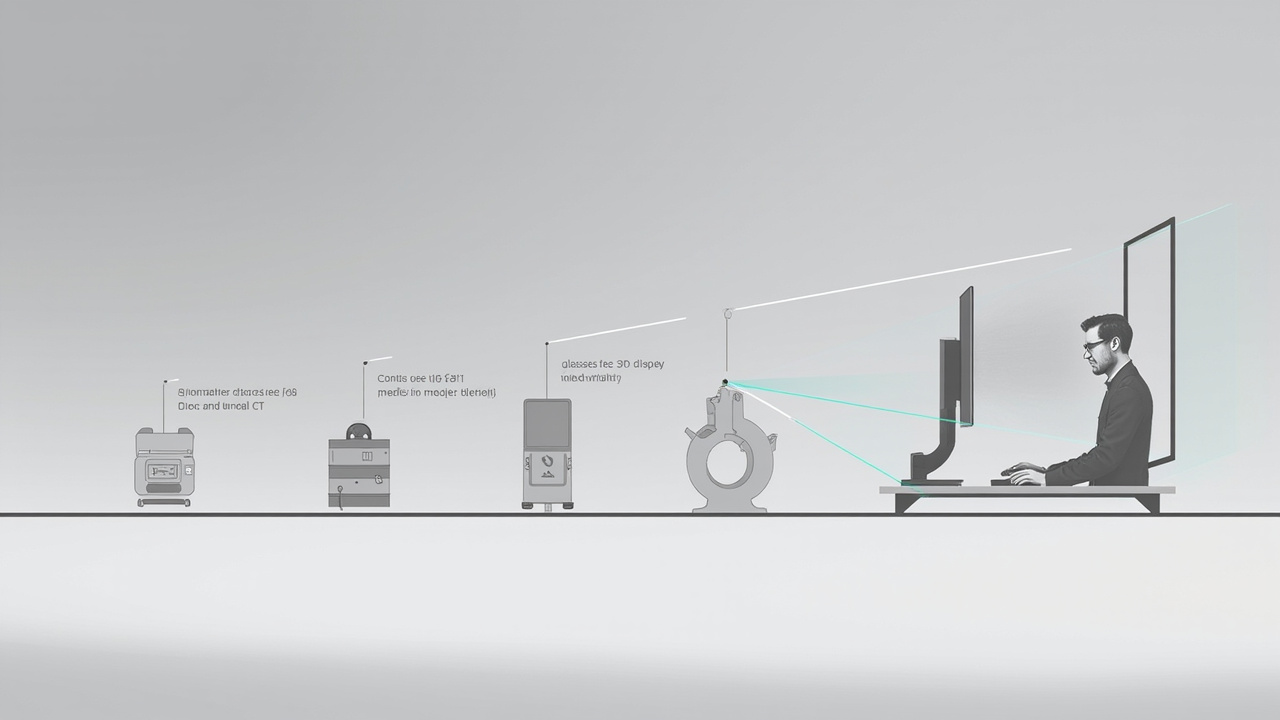
Workflow fit: stereo-ready content sources routed through a glasses-free 3D spatial display for professional review.
Next steps for buyers evaluating 3DV
For teams who arrived at this page through a search term like Lmd32m1md and want to move from keyword to evaluation, the supported next steps are:
- Confirm content compatibility through the compatibility Learn article and the Content-to-3D Path Checker at
/compatibility/. - Compare model fit between Pro and Essential series using the Display Selector at
/display-selector/. - Preview how stereo content will look through the Spatial Display Simulator at
/player/and the SBS player at/player/sbs/. - Submit a pre-purchase question through the Ask Before Ordering path at
/ask-before-ordering/. - Request a demo through the official Request Demo route for a guided evaluation against the team’s actual content.
This article is an educational explainer. It does not claim product rankings, does not assert unsupported “best” language, and keeps any medical references limited to visualization, review, education, training, communication, and workflow evaluation. Verified product facts and current route boundaries take precedence over the candidate keyword itself.